Hydraulic Pump Testing and Calibration: Ensuring Precision in Industrial Systems
TABLE OF CONTENTS
-
Key Takeaways
-
Understanding Hydraulic Pump Testing and Calibration
-
The Professional Hydraulic Pump Calibration Procedure
-
Testing vs. Acceptance: When to Calibrate Your System
-
Key Performance Indicators (KPIs) in Hydraulic Testing
-
Professional Hydraulic Services in Dammam: The ETS Advantage
-
Secure Your Industrial Precision and Reliability
-
Frequently Asked Questions
Introduction
Last month, a petrochemical facility in Jubail faced an unexpected 320,000 SAR loss in productivity when a critical system stalled during peak operations. The culprit wasn't a catastrophic mechanical break, but a subtle loss of pressure precision that went unnoticed for weeks. You likely understand that in high-stakes industrial environments across Saudi Arabia, even a minor fluctuation in machine speed or excessive heat generation can signal a looming disaster. Unplanned downtime is more than just an inconvenience; it's a direct hit to your bottom line and operational reliability.
We've seen how inconsistent force and erratic cycles can frustrate your team and damage your equipment. This guide provides a deep dive into hydraulic pump testing and calibration procedures designed to help you identify failing components before they stop your production line entirely. You'll gain a clear understanding of how to diagnose performance drops and implement proactive maintenance. We will explore professional diagnostic techniques, the step-by-step calibration process, and the specific strategies ETS uses to ensure your systems deliver peak performance under the most demanding conditions.
Key Takeaways
• Distinguish between diagnostic testing and precision calibration to ensure your high-pressure systems consistently meet original manufacturer specifications.
• Master the professional hydraulic pump testing and calibration procedures required to stabilize fluid temperatures and utilize precision monitoring instruments.
• Identify critical Key Performance Indicators such as Volumetric Efficiency to accurately measure pump health and prevent unexpected mechanical failures.
• Learn how acceptance testing verifies the performance of newly repaired or purchased units before they are integrated into your critical workflows.
• Discover how localized expert support in Dammam helps Saudi industrial operations minimize costly downtime through rapid-response diagnostics and workshop services.
Understanding Hydraulic Pump Testing and Calibration
In the demanding industrial environments of Saudi Arabia, distinguishing between diagnostic testing and calibration is vital for operational success. Diagnostic testing is a reactive process used to identify specific mechanical failures or leaks within a system. In contrast, hydraulic pump testing and calibration is a proactive technical adjustment that ensures a pump meets its original manufacturer specifications. For high-pressure systems in Dammam's petrochemical plants, even a 2% deviation from set pressure parameters can lead to catastrophic component failure or significant safety risks.
Precision calibration is the primary defense against volumetric efficiency loss. When a pump loses efficiency, it works harder to maintain flow, which directly increases energy consumption. In a facility running 24/7, a 10% drop in efficiency can add thousands of SAR to monthly utility bills. Engineers often utilize thermodynamic pump testing methods to measure these internal losses with high precision. In the Eastern Province, environmental factors like fine silica dust and ambient temperatures exceeding 50°C accelerate the degradation of hydraulic fluids, leading to premature pump drift and internal scouring.
The Impact of Calibration on System Longevity
Maintaining precise pressure alignment prevents uneven wear on internal pistons and vanes. When settings are accurate, the system experiences less vibration and reduced thermal stress on hydraulic seals, which are prone to hardening in the Saudi heat. Calibration drift is the gradual loss of accuracy due to mechanical wear and heat; it's an inevitable reality that requires consistent monitoring to prevent the total breakdown of fittings and hoses.
When to Schedule a Performance Test
Don't wait for a total system shutdown to take action. Silent signs of failure often include a subtle increase in audible noise or a sluggish response in hydraulic actuators. At ETS, we recommend integrating hydraulic pump testing and calibration into a strict 6-month or 12-month maintenance cycle, depending on the intensity of the workload. It's also mandatory to conduct a full performance test after any major repair or when a primary component, such as a control valve or motor, has been replaced to ensure the entire circuit remains balanced.
The Professional Hydraulic Pump Calibration Procedure
Precision in hydraulic pump testing and calibration requires a methodical, step-by-step approach to eliminate variables that lead to system failure. At ETS, our process begins with pre-test preparation. We stabilize the hydraulic fluid temperature to a standard operating range, usually between 45°C and 55°C. We also verify that filtration levels meet ISO 4406 cleanliness standards. Testing a pump with contaminated oil or at cold temperatures yields inaccurate data that can mask underlying wear.
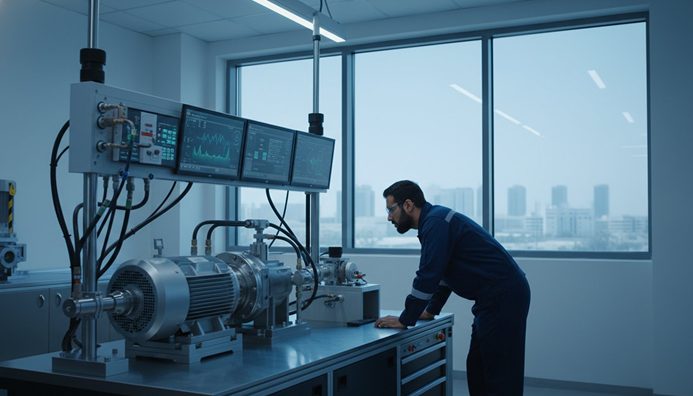
Once the system is stabilized, we install precision instruments including digital flow meters, pressure gauges, and tachometers. We establish a baseline by recording the flow rate at zero load and comparing it against the flow at maximum rated pressure. This comparison is critical for calculating volumetric efficiency.
During the adjustment phase, our technicians set pressure compensators and relief valves to exact manufacturer specifications. We finish the procedure by running the pump through a full duty cycle. This 30-minute verification ensures the unit maintains thermal stability under peak loads. Our methodology integrates technical insights from the Tribology of Hydraulic Pump Testing to ensure that lubrication and friction levels remain within safe parameters during high-pressure operations.
Step-by-Step Calibration Stages
• 01. Pre-Test Preparation: Stabilize fluid temperature (45–55°C) and verify oil cleanliness to ISO 4406 standards to ensure accurate baseline data.
• 02. Precision Measurement: Install digital flow meters and high-resolution pressure gauges to establish baseline flow rates at zero load versus maximum working pressure.
• 03. Fine-Tuning & Adjustment: Set pressure compensators, load-sense differentials, and internal relief valves to exact OEM specifications.
• 04. Full Duty Cycle Verification: Run the pump for 30 minutes under continuous rated peak load to verify thermal stability and mechanical integrity.
Essential Tools for Accurate Calibration
Precision hardware is the backbone of our service. While analog gauges are common, we prioritize high-resolution digital pressure gauges for Rexroth and Parker pumps. These tools provide 0.1% accuracy, which is necessary for fine-tuning compensator settings. We utilize turbine flow meters to capture real-time data on internal bypass leakage. Additionally, our team uses infrared thermometers to monitor case drain temperatures; a temperature variance of even 5°C can indicate internal component friction that standard gauges might overlook.
On-Site Diagnostic Testing vs. Bench Testing
On-site testing is an effective solution for rapid troubleshooting and minor adjustments. It's often enough to identify a failing valve or a simple seal leak. However, for pumps exceeding 22kW, a controlled bench test is the only way to guarantee performance. Our advanced test benches in Dammam allow us to simulate 100% load conditions in a sterile environment. This level of hydraulic pump testing and calibration ensures that when a pump returns to your facility, it's ready for immediate, high-stakes operation.
Measuring Pump Health: Volumetric Efficiency
Volumetric efficiency represents the ratio of actual delivered flow to theoretical displacement and serves as the most accurate indicator of internal wear:
| Efficiency Range | Operational Status | System Impact |
| 95% – 100% | Healthy |
Peak performance, optimal energy efficiency, minimal heat generation. |
| 85% – 94% | Warning |
Elevated internal leakage, increased electrical power draw, early wear. |
| < 85% | Critical |
Imminent failure, severe throttling losses; rebuild or replacement required. |
Testing vs. Acceptance: When to Calibrate Your System
Understanding the distinction between acceptance and performance testing is vital for maintaining operational continuity in Saudi Arabia's industrial sectors:
Acceptance Testing
Acceptance testing occurs when you purchase a new unit or receive a pump back from an ETS overhaul. It serves as your verified operational baseline. This process confirms that the equipment meets the exact flow, pressure, and leakage specifications promised by the OEM or repair scope before installation, eliminating the risk of introducing an unverified component into a live production circuit.
Performance Testing
Performance testing is a scheduled, proactive diagnostic procedure used to plot the wear curve of operating machinery. Shifting from reactive maintenance to predictive calibration allows turnaround managers to schedule component overhauls during planned plant outages. Recently, a petrochemical plant in Dammam Industrial City identified internal slippage in their primary feed pumps through our testing protocols. By recalibrating displacement and compensator settings, they restored operational stability and achieved over 65,000 SAR in annual power savings.
Interpreting Test Data: The "Case Drain" Rule
The case drain line serves as the diagnostic heartbeat of piston and vane pumps. Under standard operating parameters: • Baseline Leakage: Nominal case drain flow should remain within design tolerances.
• Warning Threshold (7%): Signals initial clearance degradation across valve plates, cylinder blocks, or piston shoes.
• Shutdown / Rebuild Limit (10%): When case drain leakage exceeds 10% of maximum rated pump output, internal clearances have expanded to critical levels, mandating immediate workshop rebuilding to prevent complete seizure.
The Role of Calibration in Custom HPUs
Custom-built Hydraulic Power Units (HPUs) do not conform to generic factory settings. Each custom system operates with bespoke cylinder tonnages, proportional valves, and variable cycle speeds. Precision calibration aligns pump displacement, pressure compensator limits, and load-sensing margins to match exact circuit parameters, eliminating energy waste and preventing thermal runaway under summer operating conditions.
Key Performance Indicators (KPIs) in Hydraulic Testing
We track four critical KPIs to evaluate pump health and maintain zero-defect standards:
• Volumetric Efficiency: The ratio of delivered flow against theoretical output, directly indicating internal mechanical and hydraulic slippage.
• Pressure Compensation: The speed and accuracy with which the pump destroke mechanism stabilizes system pressure during load transitions.
• Case Drain Leakage: Quantitative measurement of internal bypass oil using inline digital flow meters, serving as the earliest warning sign of rotating group fatigue.
• Response Time: Measured in milliseconds, tracking how rapidly a variable-displacement pump transitions from standby zero flow to 100% full-flow delivery upon actuator demand.
Professional Hydraulic Services in Dammam: The ETS Advantage
Emdad Technical Services (ETS) provides specialized testing, dynamic calibration, and component rebuild services across the Eastern Province. From our facility in Dammam 2nd Industrial City, our engineers support leading international hydraulic pump brands including Bosch Rexroth, Parker Hannifin, and Danfoss.
• OEM-Grade Verification: Calibrated hydraulic test stands capable of simulating dynamic continuous loads up to 100% capacity.
• Rapid Diagnostic Turnarounds: 24-hour turnaround times for standard diagnostic reporting to keep maintenance shutdowns on schedule.
• Integrated Spare Parts Ecosystem: In-house stocks of OEM rotating kits, valve plates, bearings, and high-temp Viton seal kits for immediate rebuilds following test bench diagnosis.
• Audit-Ready Documentation: Every completed calibration procedure includes a comprehensive, ISO-compliant test certification verifying pressure, flow, and volumetric efficiency curves.
Secure Your Industrial Precision and Reliability
Precision calibration transforms maintenance from an unpredictable cost into a measurable operational advantage. Keeping pumps calibrated to within 100% of factory specifications prevents premature fluid breakdown, lowers electrical power draw, and guarantees system reliability across Saudi Arabia's industrial corridors.
Schedule a pump calibration audit or request test bench verification at etsarabia.com.
Frequently Asked Questions (FAQs)
What is the difference between hydraulic pump testing and calibration?
Testing evaluates current operational parameters (flow, pressure, leakage) to diagnose the physical health of the unit. Calibration involves mechanically adjusting internal controls—such as pressure cut-off compensators, flow limiters, and load-sensing springs—to bring operating outputs strictly into alignment with OEM tolerances.
How often should a hydraulic pump be calibrated in a high-heat environment?
In severe Middle Eastern operating climates where temperatures exceed 45°C, calibrate mission-critical hydraulic pumps every 3 to 6 months. Routine calibration counteracts fluid thinning and thermal drift, protecting facilities from sudden outages that exceed 18,000 SAR per hour in downtime.
Can I calibrate my hydraulic pump while it's still installed on the machine?
Minor adjustments to pressure compensators and load-sense margins can be made on-site, but full precision calibration requires isolating the unit on a dedicated workshop test bench. A bench test isolates the pump from external variables like sticking manifold valves or leaking cylinder packings, measuring performance with up to 99.5% accuracy.
What tools are required for a standard hydraulic pump performance test?
A comprehensive performance test requires high-pressure turbine flow meters, calibrated digital pressure transducers (accurate to 0.1%), digital optical tachometers, infrared case thermometers, and multi-channel data acquisition loggers to record rapid pressure spikes.
What are the signs that my hydraulic pump needs immediate calibration?
Key indicators include a 12% or greater increase in actuator cycle times, operating temperatures rising more than 10°C above baseline, or pump sound levels exceeding 85 decibels, which indicates internal compensator drift and flow bypass.