Hydraulic System Upgrade Services: Modernizing Industrial Performance in 2026
TABLE OF CONTENTS
-
Key Takeaways
-
What are Hydraulic System Upgrade Services?
-
Key Technologies Driving Hydraulic System Upgrades
-
Repair vs. Upgrade: Calculating Your ROI
-
Planning Your Hydraulic Upgrade in Saudi Arabia
-
Partnering with ETS for Comprehensive Hydraulic Modernization
-
Secure Your Competitive Edge for 2026 and Beyond
-
Frequently Asked Questions About Hydraulic System Upgrades
Introduction
In Saudi Arabia's demanding industrial climate, up to 30% of a plant's energy expenditure can be lost to inefficient, overheating hydraulic systems. It's a constant battle against rising operational costs and the persistent threat of unpredictable downtime from aging machinery, especially when sourcing obsolete parts feels impossible. The frustration of seeing profits literally dissipate as heat is a familiar reality for many operations managers.
This guide provides a clear roadmap to reclaim that lost performance. We'll demonstrate how strategic hydraulic system upgrade services can transform these legacy assets into models of modern efficiency, capable of extending their operational lifespan by over 10 years. You will learn how to drastically reduce energy bills, integrate modern IoT monitoring for predictive maintenance, and ensure your equipment is a reliable contributor to your bottom line. Discover the key modernization strategies, from intelligent component retrofitting to complete system redesigns, that deliver guaranteed performance and a significant return on investment for your 2026 operational goals.
Key Takeaways
• Understand how strategic modernization goes beyond simple repairs to fundamentally improve your system's pressure, flow, and control precision.
• Explore how integrating technologies like Variable Frequency Drives (VFDs) and smart sensors can significantly reduce energy consumption and enable predictive maintenance.
• Calculate the real cost of the "Repair Loop"—including labor, parts, and lost production in SAR—to see why professional hydraulic system upgrade services deliver a superior long-term ROI.
• Learn how to plan a successful upgrade in Saudi Arabia by accounting for critical local factors like extreme heat, sand, and specific industrial safety regulations.
What are Hydraulic System Upgrade Services?
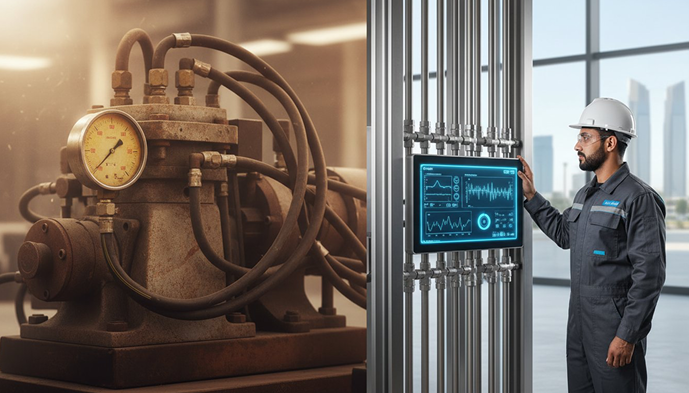
Routine maintenance fixes problems as they occur, but it doesn't fundamentally improve your machinery's capability. Repair restores function; modernization elevates it. A hydraulic upgrade is a strategic overhaul that integrates modern components into existing frameworks to boost performance, efficiency, and reliability. This process goes beyond simple part replacement. It involves a comprehensive re-evaluation of your entire system's design and purpose. The core objective is to achieve quantifiable gains in system pressure, flow, and control precision, transforming aging assets into competitive advantages. True hydraulic machinery isn't just about power; it's about the precise application of that power, and an upgrade ensures every drop of fluid delivers maximum value.
For many industrial operators in Saudi Arabia, 2026 represents a critical tipping point. Systems installed during the industrial expansion of the early 2010s are now reaching the end of their optimal 15-year service life. Continuing with legacy components past this point doesn't just risk failure; it means falling behind on the efficiency and automation goals central to Saudi Vision 2030. As key component series from major manufacturers are phased out, waiting for a breakdown is no longer a viable strategy. Proactive hydraulic system upgrade services are essential to prevent emergency downtime that can cost upwards of 100,000 SAR per hour in lost production.
The Anatomy of a Modernization Project
A successful upgrade is a multi-faceted project engineered for specific outcomes. It typically involves replacing legacy pumps, valves, and cylinders with high-efficiency models that can reduce energy consumption by up to 25%. We also analyze and redesign circuit layouts, optimizing hose routing and manifold blocks to minimize pressure drops and reclaim wasted energy. The most transformative step is often control integration, moving from manual levers to modern proportional and digital controls. This leap allows for PLC integration, remote monitoring, and a level of precision that was previously unattainable.
Signs Your System is Ready for an Upgrade
• Persistent Overheating: Your system consistently operates above 80°C even after the heat exchangers and cooling circuits have been serviced or replaced. This points to fundamental inefficiencies creating excess heat.
• Slow Cycle Times & Lost Precision: You notice a greater than 15% drop in cycle speed or operators can no longer achieve the fine control needed for quality output. This is a direct sign of internal component wear and pressure loss.
• Component Obsolescence: Sourcing spare parts for older components, like specific series from brands such as Rexroth or Parker, has become a procurement challenge with lead times exceeding 12 weeks. This is a critical risk to your operational continuity.
Key Technologies Driving Hydraulic System Upgrades
• Variable Frequency Drives (VFDs): A standard hydraulic system runs its electric motor at constant full speed, consuming maximum power regardless of actual demand. Adding a VFD slashes power draw by 30% to 60% by matching motor RPM directly to flow demand.
• Smart Sensors & IoT Integration: Embedded pressure transducers, flow transmitters, thermistors, and oil particulate sensors transition maintenance from reactive fixes to predictive alerts weeks in advance.
• High-Performance Seals & Fittings: Replacing standard nitrile with fluoroelastomers (Viton™/FKM) and specialized polyurethanes prevents seal embrittlement in ambient desert temperatures exceeding 50°C.
• Custom Engineered HPUs: Bespoke hydraulic power packs designed with optimized fluid reservoirs, integrated VFD controls, and high-efficiency manifolds specifically matched to production lines.
• Digitalization & Proportional Controls (Hydraulics 4.0): Replacing manual directional spools with proportional and servo valves linked to PLCs improves machine control precision by over 15%.
• High-Efficiency Cooling & Synthetic Media: Brazed plate heat exchangers delivering 25% better thermal dissipation paired with synthetic fluids that extend oil operating life by up to 50%.
Comparison: Reactive Repair vs. Strategic Upgrade
| Metric | Reactive Repair (The Old Way) PDF | Strategic Modernization (The Smart Investment) PDF |
| System Capability |
Restores baseline to previous degraded state |
Elevates pressure, flow accuracy, and automation |
| Energy Consumption |
Unchanged; continues high power drain |
Reduced by 25% to 60% (via VFDs & efficient pumps) |
| Asset Lifespan |
Extends run-time marginally (weeks/months) |
Resets operational lifespan by 8 to 10+ years |
| Component Sourcing |
Vulnerable to obsolete series & 12-week lead times |
Standardized on current, locally available OEM stock |
| Financial Impact |
Repeated emergency labor and lost production |
High ROI (>150% in 24 months) and predictable costs |
Repair vs. Upgrade: Calculating Your ROI
The decision between a reactive repair and a strategic upgrade is a critical financial crossroad for any industrial operation in Saudi Arabia. While a quick fix might seem like the most cost-effective immediate solution, it often traps businesses in a "Repair Loop"—a costly cycle of recurring failures, emergency call-outs, and escalating downtime.
The Hidden Costs of the Repair Loop
• Emergency Labor Premiums: Urgent after-hours technician call-outs exceed 2,500 SAR before work starts.
• Legacy Part Premiums: Sourcing obsolete components adds a 40% to 60% markup and weeks of delivery delays.
• Lost Production Outages: Facility downtime routinely costs over 30,000 to 100,000 SAR per hour in missed targets.
• Cumulative Losses: Experiencing 3 to 4 failures a year drains more than 250,000 SAR in unbudgeted operational expenses.
Capital Investment vs. Long-Term Returns
Comparing a 15,000 SAR temporary repair to a 150,000 SAR modernization requires factoring in lifecycle benefits. Upgrades mitigate obsolescence risks, lower electricity bills by over 20,000 SAR annually on a 100kW motor system, and qualify under ZATCA accelerated depreciation guidelines as well as industrial modernization funding initiatives like SIDF. Rebuilding a large press system to 95% new performance costs roughly 450,000 SAR compared to 1.5 million SAR for complete equipment replacement.
Planning Your Hydraulic Upgrade in Saudi Arabia
A successful modernization in the Eastern Province must be engineered around regional operating demands:
• Extreme Thermal Environments: Ambient temperatures exceeding 48°C to 50°C combined with high coastal humidity accelerate fluid breakdown and reduce cooler efficiency. Upgraded systems require oversized heat exchangers and high-viscosity synthetic fluids.
• Abrasive Sand & Dust Ingress: Airborne silica rapidly destroys standard seals. Upgrades require 3-micron filtration and heavy rod scraper systems.
• Regulatory Compliance: All electrical, mechanical, and pressure vessel modifications must conform to SASO standards and meet HCIS directives for critical energy infrastructure.
• Site Assessments & Technical Audits: Engineering audits use infrared thermal surveys, ultrasonic leak detection, and digital flow analysis to pinpoint component bottlenecks before designing modifications.
• Local Parts Availability: ETS maintains over 10,000 certified parts in Dammam 2nd Industrial City from Parker, Rexroth, and Danfoss, cutting international freight delays by up to 12 days.
Partnering with ETS for Comprehensive Hydraulic Modernization
Emdad Technical Services (ETS) provides end-to-end modernization programs engineered to eliminate system downtime:
• Custom HPU Design & Fabrication: In-house fabrication of turnkey power packs tailored for heavy manufacturing, marine, and oilfield operations.
• Downtime Optimization: Upgrade projects are pre-piped, pre-assembled, and scheduled during planned plant shutdowns, cutting installation downtime by over 60%.
• End-to-End Lifecycle Execution: Dedicated services covering initial engineering audit, hydraulic schematic redesign, PLC integration, on-site commissioning, and ongoing preventive maintenance contracts.
Secure Your Competitive Edge for 2026 and Beyond
Industrial modernization is a key lever to meet the operational efficiency and sustainability benchmarks of Saudi Vision 2030. Retrofitting modern VFD controls, IoT monitoring, and high-efficiency hydraulics typically yields an ROI exceeding 150% within two years.
Request a comprehensive technical audit of your hydraulic machinery today at etsarabia.com.
Frequently Asked Questions (FAQs)
How much does a hydraulic system upgrade typically cost?
Costs range from approximately 15,000 SAR for basic component/manifold modernizations to over 300,000 SAR for complete automated power units with PLC and proportional controls, determined after an on-site audit.
How long does a typical hydraulic modernization project take?
Full engineering and commissioning cycles generally take 2 to 8 weeks, while targeted upgrades (such as valve block replacements) can be completed in under 5 working days during planned plant turnarounds.
Can I upgrade my hydraulic system without replacing the entire machine?
Yes. Over 90% of industrial modernization projects involve retrofitting new pumps, valves, and electronic control packages onto existing heavy mechanical frames, saving up to 70% compared to new machine purchases.
What are the main benefits of upgrading to proportional valves?
Proportional valves deliver variable electronic speed and pressure control, improving machine cycle accuracy by up to 30% while reducing system throttling energy losses by 15% to 20%.
Is it possible to add IoT monitoring to an older hydraulic system?
Yes. Diagnostic sensor packages (pressure, temperature, fluid particle counters, vibration) can be retrofitted onto legacy reservoirs and lines, enabling predictive fault warnings that prevent up to 70% of unexpected breakdowns.
How do I know if my hydraulic pump is obsolete and needs an upgrade?
Key indicators include a 15%+ increase in motor power draw, parts delivery lead times exceeding 4 to 12 weeks, persistent cavitation noise, and inability to reach operating pressure at high cycle speeds.
Does ETS provide on-site upgrade services in Dammam and Jubail?
Yes. ETS deploys fully equipped engineering teams for on-site audits, retrofits, valve block installations, and complete commissioning across Dammam, Jubail, and the Eastern Province.